

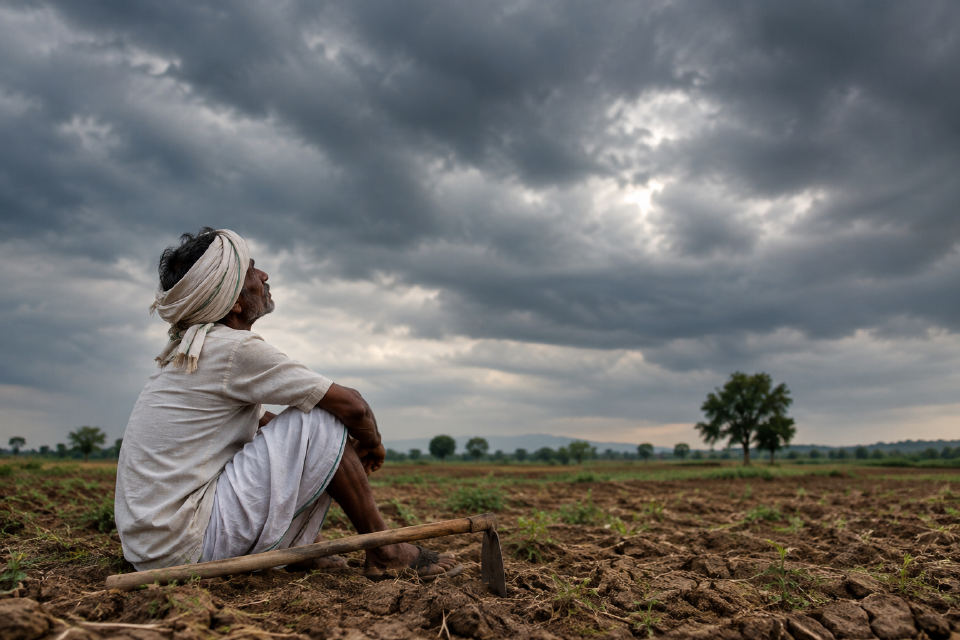
Rainy conditions have prevailed so far this year. Even though there have been scattered rains here and there in some areas, as the rains have not fallen as expected, as the rainy season is coming to an end, the hearts of the farmers in the country are starting to worry. According to the forecasts of the Meteorological Department, there are chances of changes in the weather conditions in the country from the third week of September. At the same time, there is a concern that the influence of 'El Nino', which is strengthening in the Pacific Ocean, will have a severe impact on the cultivation of Rabi crops.
Statistics show that many states like Andhra Pradesh, Karnataka and Bihar have received 27 to 45 percent less rainfall than normal.Even at the end of the rainy season, if the rains continue, the question arises as to what will happen to the Rabi crops sown in winter.
Generally Rabi season starts in September. If the rains are delayed, there is a risk that the soil moisture content will decrease significantly, even if the sowing time does not change much. Although water reserves in the country's major reservoirs have improved compared to last year, concerns remain over the continued availability of water for agricultural needs.
Rabi season is very important in agriculture. Crops such as wheat, mustard etc. which depend on the moisture in the soil, are in danger of facing a serious threat this time. The states of Uttar Pradesh, Rajasthan and Haryana have the highest wheat cultivation. Crops in Maharashtra, Karnataka and Madhya Pradesh also depend on soil moisture.Their yields are at risk of significant damage if the soil dries out.
However, the editorial mentions that the 'Indian Ocean Dipole' which can reduce the drought conditions caused by El Nino is a ray of hope. It states that there is a possibility of rain clouds towards India due to positive changes in the Indian Ocean. In the past, the IOD has cited instances where the influence of El Nino has moderated conditions to some extent.
However, as this effect is likely to be limited to the rainy season, it is doubtful how much it will be able to replace the dried up reservoirs and the reduced ground water. If the moisture content of the soil does not increase in the months of October and November, there is a risk that the area of Rabi crops will decrease and the yields will also be damaged.The editorial warns that if the supply of wheat, pulses and cooking oil is affected, the prices may rise.
On the other hand, the drought situation in Telangana is also worrying. Due to lack of rain, the cultivation of crops has decreased significantly. There was also shortage of water for the crops grown depending on the wells. Boreholes are drying up due to falling ground water. Even though farmers are digging new boreholes to save their drying crops, there is no water supply in many areas.
Farmers are worried that if the rainy conditions continue for some time, they will have to give up hope on the crops. Statistics indicate that the area under cultivation this year has decreased compared to the area under normal cultivation in the state.The editorial states that the area under cultivation has also decreased in major crops.
If the rains are not abundant, it will affect not only the Kharif crops but also the upcoming Rabi season. It is likely to affect the farmers' income as well as the supply and prices of food grains.
The hopes of the farmers are looking towards the sky at this time when the rains are coming. There is a need for rains in the remaining days of September to provide moisture to the land, water to the reservoirs and assurance to the rice farmers.
'Farmers waiting for rains.. growing concern over rabi cultivation'
— Anand Rao
Editor- Abhyudhayam